

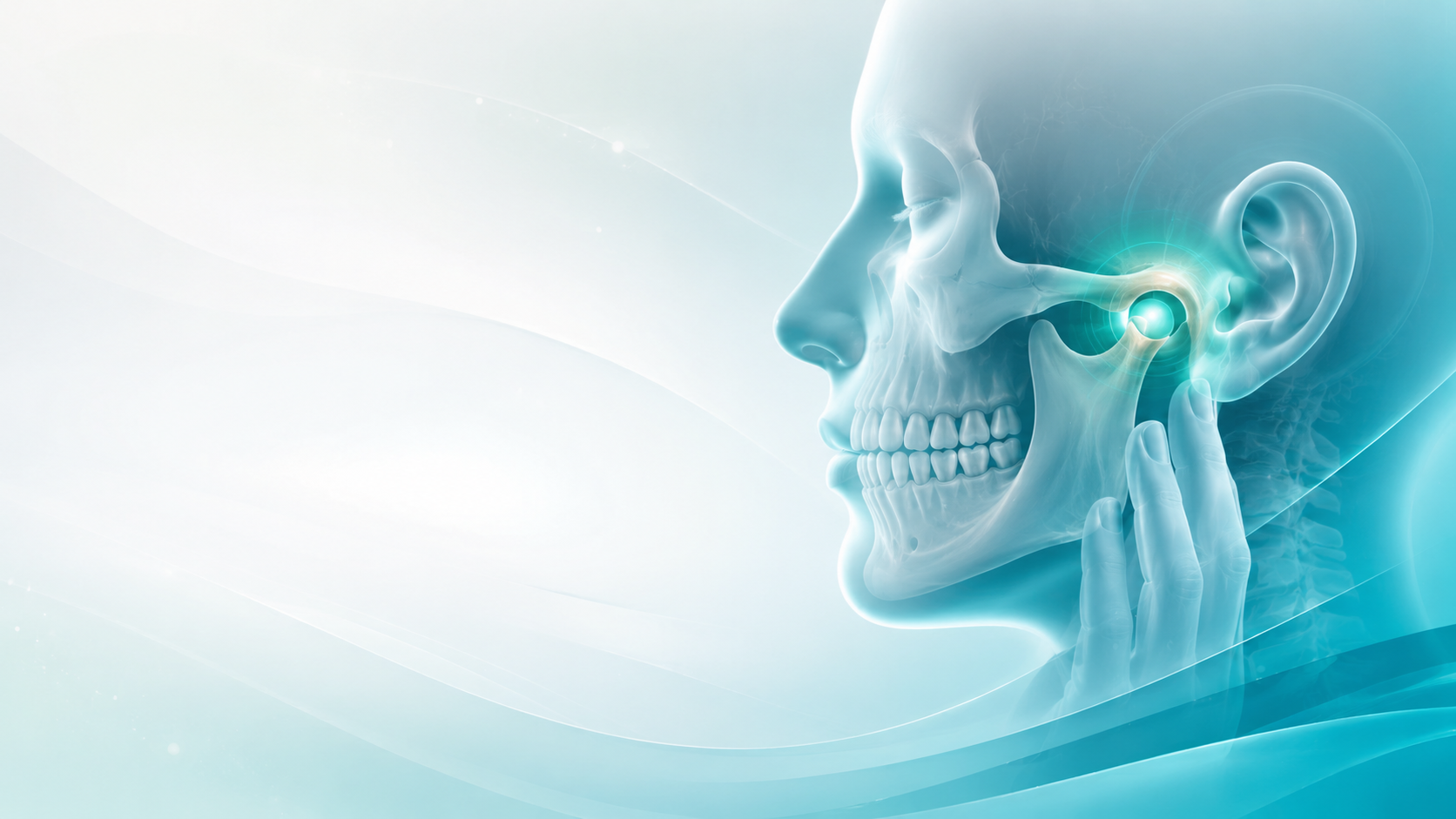
TMJ and TMD Therapy
Non-Surgical TMJ and TMD Therapy
Precise diagnostics. Custom orthotics. Lasting relief without surgery.
Chronic jaw pain, tension headaches, clicking or popping joints, and neck stiffness are often dismissed as stress or written off as something to manage rather than treat. In many cases, they point to something more specific: a misalignment within the temporomandibular joints that is causing the surrounding muscles and structures to overwork.
At San Diego Dental Health Center, we treat TMJ and TMD disorders using a non-surgical approach built on detailed diagnostics, custom in-house orthotics, and coordinated care with physical and medical specialists where needed. We don't start with a nightguard and hope for the best. We start with a thorough understanding of what your joints are actually doing.
Our Diagnostic Approach
Effective TMJ treatment requires two things: a clear picture of what the joint looks like structurally, and an accurate record of how it behaves in motion. Most practices only have access to one of those.
Radiologist-Led CBCT Imaging
We have a Board-Certified Oral and Maxillofacial Radiologist on our team, which is uncommon in a private dental practice. Your 3D CBCT scans are read at a specialist level, giving us detailed analysis of bone density, joint space, condylar position, and signs of arthritis, structural wear, or disc displacement within the joint capsule.
4D Dynamic Jaw Tracking
A joint that only gets assessed at rest tells an incomplete story. Using mandibular tracking devices, we record your jaw movement in real time during chewing, speaking, and swallowing. This captures exactly when and where clicking, deviation, or muscular strain occurs, information that a static scan simply cannot provide.
Functional Occlusal Analysis
We map your bite directly against your joint data. This often reveals small interferences in tooth contact that are forcing your jaw muscles to constantly compensate, a common and frequently overlooked contributor to chronic TMJ pain and headaches.
The In-House Orthotic
Once we've analyzed your diagnostic data, we design a custom neuromuscular orthotic appliance in our on-site digital lab. This is not a generic soft nightguard. It's a precision-milled, rigid medical appliance engineered via 3D CAD software to place your lower jaw in a specific, medically optimized position. The distinction matters because the position of the jaw determines how the muscles, joints, and bite all interact.
Treatment typically follows a structured progression:
Weeks 1 to 2: Joint Decompression
The orthotic unloads the compressed TMJ discs, reducing inflammation, joint noise, and acute muscle spasms.
Weeks 3 to 4: Muscle Retraining
By restoring a more ideal bite height, the facial, jaw, and neck muscles are taken out of their chronic state of tension and begin to function more normally.
Weeks 5 to 8: Bite Stabilization
As the joint finds a more centered position, the bite stabilizes. The majority of our patients experience significant reduction in headaches, jaw pain, and joint noise within this timeframe, though individual results vary based on the nature and duration of the condition.
Coordinated Care Where It's Needed
TMJ disorders don't always stay neatly contained to the jaw. In many patients, symptoms extend into the cervical spine, affect posture, or involve broader pain sensitivity. For those cases, our orthotic therapy works best as part of a coordinated plan.
We work alongside craniofacial physiotherapists who focus on the upper cervical spine, postural correction, and muscle rehabilitation in tandem with our orthotic treatment. For patients managing complex or long-standing chronic pain, we also coordinate with pain medicine specialists to address systemic symptoms while we work on the underlying structural cause.
You Don't Have to Keep Managing This
Jaw pain, joint noise, and chronic tension headaches are real symptoms with diagnosable causes. If you've tried nightguards or other treatments without lasting results, a more thorough diagnostic workup may reveal what's actually driving them.
Frequently Asked Questions
What is the difference between TMJ and TMD?
TMJ stands for temporomandibular joint, the joint connecting your lower jaw to your skull on either side of your face. TMD, or temporomandibular disorder, refers to a range of conditions affecting that joint and the surrounding muscles and structures. People often use TMJ informally to describe the disorder itself, but technically TMD is the correct term for what's being treated.
What symptoms are associated with TMD?
The most common symptoms include jaw pain or soreness, clicking or popping sounds when opening and closing the mouth, headaches that originate near the temples or behind the eyes, neck and shoulder tension, ear fullness or ringing, and difficulty opening the mouth fully. Symptoms often worsen during periods of stress or after eating.
Why is a nightguard not enough?
A standard nightguard protects your teeth from grinding but doesn't address the underlying jaw position that may be causing the problem. A neuromuscular orthotic, by contrast, is designed to a specific jaw position based on your diagnostic data. The goal is not just to cushion the joint but to actively guide it toward a more stable, less painful resting position over time.
How is the custom orthotic made?
After completing your diagnostic workup, including CBCT imaging and 4D jaw tracking, we use 3D CAD software to design your orthotic in-house. It's milled from a rigid material to precise specifications based on your anatomy and the jaw position our team determines is optimal for you. Because it's made in our own lab, we're able to adjust it quickly if needed throughout treatment.
How long does treatment take?
Most patients complete the primary orthotic phase within 8 weeks and notice meaningful improvement in that time. The pace and degree of relief depend on the severity of the condition, how long it's been present, and individual healing. After the orthotic phase, some patients move into a longer-term stabilization or maintenance plan, which we discuss based on how treatment progresses.
Is TMD treatment covered by dental insurance?
Coverage varies significantly by plan and provider. Some insurers treat TMD therapy as a dental benefit, others as a medical one, and some exclude it altogether. We recommend contacting your insurance provider directly and we're happy to provide documentation to support any claims you submit.
What if I've already had TMJ treatment elsewhere without results?
It's not uncommon for patients to come to us after previous treatment that didn't resolve their symptoms. In many cases, the missing piece is diagnostic depth. If prior treatment was based on a general assessment rather than 4D tracking and specialist-level radiology, there may be factors that simply weren't identified. We start fresh with a full workup and let the data drive the plan.